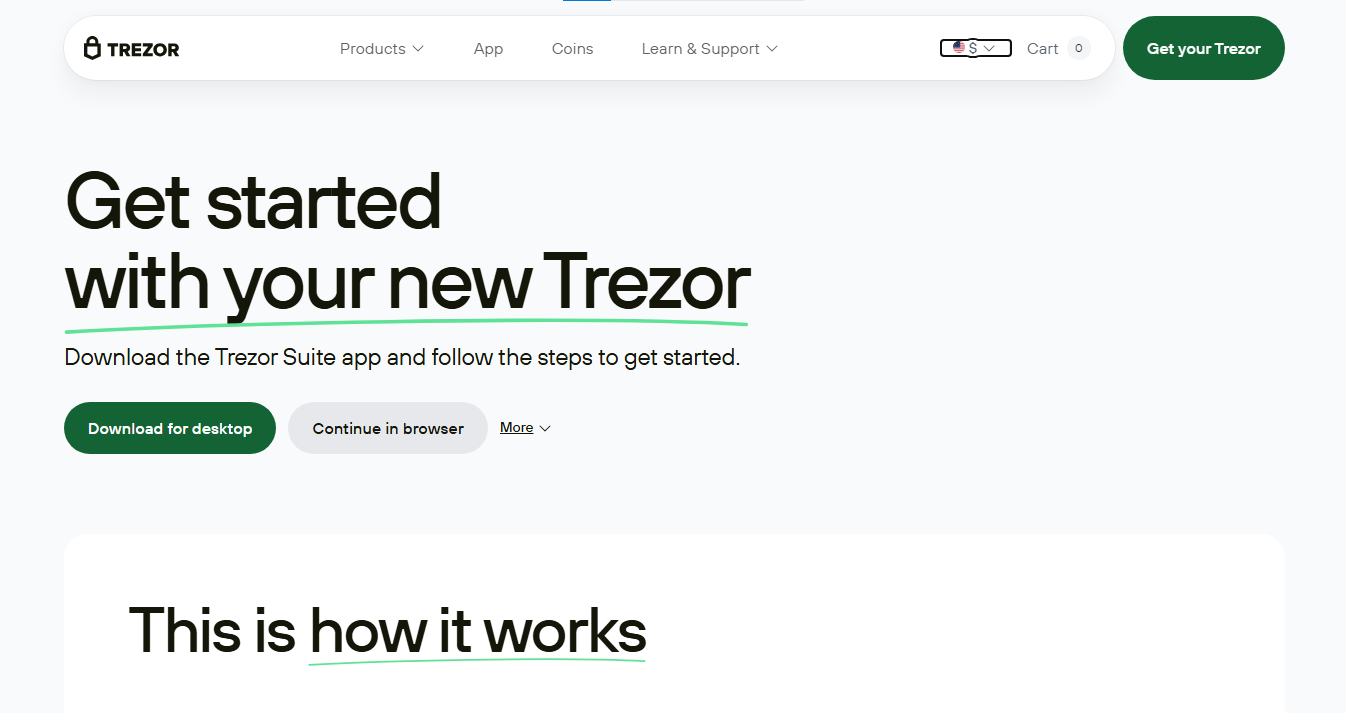
Trezor Suite — The Ultimate Guide to Hardware-Powered Crypto Management
Discover how Trezor Suite integrates with hardware wallets, why offline signing strengthens security, and how cold storage, HD wallets, and physical verification combine to create a safer self-custody experience.
What Trezor Suite Does — And Why It Is Different From Software Wallets
Trezor Suite acts as a polished, intuitive interface for managing your cryptocurrency, but it never handles private keys directly.
Instead, it communicates with a Trezor hardware wallet that securely stores keys inside a dedicated chip using cold storage isolation, secure elements, and deterministic derivation paths.
Signing happens only inside the device through offline cryptography, typically using ECDSA or Ed25519.
Even if your computer is compromised, a transaction cannot be approved unless you physically confirm it on the hardware wallet.
This separation of duties dramatically reduces the risk of remote attacks and makes Trezor Suite a preferred tool for secure self-custody.
Instead, it communicates with a Trezor hardware wallet that securely stores keys inside a dedicated chip using cold storage isolation, secure elements, and deterministic derivation paths.
Signing happens only inside the device through offline cryptography, typically using ECDSA or Ed25519.
Even if your computer is compromised, a transaction cannot be approved unless you physically confirm it on the hardware wallet.
This separation of duties dramatically reduces the risk of remote attacks and makes Trezor Suite a preferred tool for secure self-custody.
Key Features Inside Trezor Suite
Users can:
- Track balances across multiple blockchains
- Initiate secure transactions with hardware approval
- Install and manage coin applications
- Upgrade firmware safely
- Verify transaction details on a trusted display
A Safety Moment — When the Device Exposes a Scam
Marcus attempted a transfer while running a compromised browser extension.
The address shown on his screen looked normal — but the hardware wallet displayed something completely different.
Because the device uses a trusted display, the incorrect address could not fool the user.
Marcus declined the transaction and avoided a loss.
This incident highlights the core principle:
Hardware verification prevents software from silently hijacking transactions.
The address shown on his screen looked normal — but the hardware wallet displayed something completely different.
Because the device uses a trusted display, the incorrect address could not fool the user.
Marcus declined the transaction and avoided a loss.
This incident highlights the core principle:
Hardware verification prevents software from silently hijacking transactions.
How Trezor Suite Collaborates With Hardware
1. Public Data Displays on Your Computer
You view balances, history, and accounts.
2. Private Keys Stay Inside the Device
They never touch the computer or internet.
3. Signing Happens Offline
No exposure to hackers or remote scripts.
4. Physical Confirmation Is Required
Buttons and screen stop unauthorized approval.
Security Layers Protecting Your Keys
Trezor wallets combine multiple defenses:
- Secure chips with anti-tamper mechanisms
- Cold storage key isolation
- Offline ECDSA signing
- Verified physical display
Wallet Comparison Overview
| Wallet Type | Security | Key Control | Best For |
|---|---|---|---|
| Trezor Suite + Hardware | Very High | User | Secure storage |
| Software Wallet | Medium | User | Everyday spending |
| Exchange Wallet | Low | Custodian | Trading |
Best Practices for Safe Usage
✔ Confirm every action on the hardware screen
✔ Keep your recovery seed offline
✔ Only use official software
✔ Update firmware regularly
✔ Never type your seed into a computer
✔ Keep your recovery seed offline
✔ Only use official software
✔ Update firmware regularly
✔ Never type your seed into a computer
Frequently Asked Questions
1. Does Trezor Suite store private keys?
No — keys remain inside the hardware device.
2. Can malware sign transactions?
No — physical approval is mandatory.
3. Does it support many coins?
Yes — dozens of major networks.
4. Is it safe for beginners?
Very — intuitive and protected.
5. How do I restore my wallet?
With your recovery seed on another Trezor device.
No — keys remain inside the hardware device.
2. Can malware sign transactions?
No — physical approval is mandatory.
3. Does it support many coins?
Yes — dozens of major networks.
4. Is it safe for beginners?
Very — intuitive and protected.
5. How do I restore my wallet?
With your recovery seed on another Trezor device.
Conclusion — Trezor Suite Brings Usability Together With Hardware-Level Security
Trezor Suite provides a clean, user-friendly interface while the hardware wallet handles every cryptographic operation.
Offline signing, cold storage architecture, HD derivation, and physical verification ensure keys remain protected even in hostile environments.
With disciplined practices, this ecosystem offers one of the strongest self-custody frameworks available today.
Trezor Suite gives you control, clarity, and confidence — while the hardware guards your assets at the deepest level.
Offline signing, cold storage architecture, HD derivation, and physical verification ensure keys remain protected even in hostile environments.
With disciplined practices, this ecosystem offers one of the strongest self-custody frameworks available today.
Trezor Suite gives you control, clarity, and confidence — while the hardware guards your assets at the deepest level.